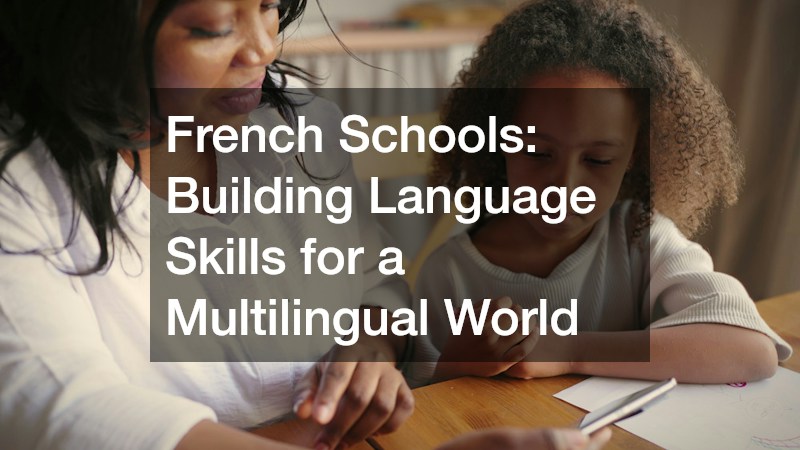

Learning more than one language can give children valuable communication skills in an increasingly interconnected world. For families considering bilingual education, french schools can provide an environment where children regularly encounter multiple languages as part of their everyday learning. Rather than treating another language as an isolated subject, French schools can incorporate language development into classroom instruction, activities, and social experiences.
The Growing Value of Bilingual Education
Children today may interact with people from a wide range of linguistic and cultural backgrounds. Learning another language can help them communicate across those differences while developing an appreciation for perspectives beyond their immediate surroundings. Bilingual education gives students opportunities to encounter multiple languages consistently, helping language learning become part of their regular educational experience.
French schools can support this approach by incorporating French into classroom instruction and daily activities. Instead of limiting language exposure to designated lessons, students can encounter French while learning, interacting with classmates, and participating in school activities. This consistent exposure can help make language development a natural part of childhood education.
How French Schools Build Strong Language Foundations
Developing proficiency in another language takes regular practice and meaningful exposure. French schools can help students strengthen vocabulary, comprehension, speaking, and writing skills through repeated opportunities to use French in different situations. This can give children a chance to apply what they learn rather than simply memorizing individual words or grammatical rules.
Meaningful language use can also help students understand how words and phrases function within conversations and academic settings. The goal is not simply to recognize French vocabulary but to develop the ability to use the language to understand information, express ideas, and communicate with others.
Learning Through Everyday Communication
Classroom discussions, group projects, and social interactions can provide natural opportunities for students to practice French. Children may ask questions, share ideas, work with classmates, or participate in activities that require them to communicate in another language.
These experiences can reinforce language skills over time. As students repeatedly hear and use French, they can become more familiar with vocabulary, sentence structures, and common expressions. French schools that encourage regular communication can therefore create an environment where students have opportunities to build confidence through practice.
Connecting Language With Academic Learning
Language development can become even more meaningful when students use French while learning academic subjects. Studying topics such as science, history, or mathematics in another language can encourage students to apply their language skills to practical situations.
This approach can also help children view language as a tool for learning and communication rather than simply another school requirement. French schools can integrate language into academic experiences, giving students opportunities to develop both subject knowledge and communication skills at the same time.
Supporting Cultural Awareness Through Language
Language and culture are closely connected. Learning French can introduce children to traditions, literature, customs, and perspectives associated with French-speaking communities around the world. This broader exposure can help students recognize that people may approach communication, traditions, and everyday experiences in different ways.
French schools can incorporate cultural experiences into language education through books, classroom activities, celebrations, and discussions. These experiences can make learning another language more engaging while helping students develop greater awareness of cultures beyond their own.
Developing Communication Across Cultures
Learning another language can encourage children to think about how communication varies between cultures. Words and expressions may carry meanings or expectations that depend on context, and understanding those differences can help students communicate more thoughtfully.
Exposure to another language through French schools can therefore support more than vocabulary development. It can give children opportunities to consider different perspectives and understand the importance of cultural context when communicating with others.
Preparing Children for a Multilingual Future
The language skills children develop during their early education can continue to serve them as they encounter new academic, social, and professional opportunities. Bilingual abilities may help students communicate with a wider range of people and navigate environments where multiple languages are spoken.
Language development is also an ongoing process. Continued reading, conversation, travel, education, and interaction with other speakers can provide opportunities to strengthen skills over time. French schools can establish an early foundation that encourages children to continue developing their abilities as they grow.
For families interested in bilingual education, French schools can represent an approach that combines language development with academic and cultural learning. By giving children consistent opportunities to communicate, learn, and engage across languages, French schools can help prepare students to become confident communicators in an increasingly multilingual world.